Laptop Rental Benefits for Corporate Companies
Bulk laptop rental can be useful for a temporary project, changing headcount or a planned deployment, but it is not automatically better than buying. Corporate buyers should compare total cost, control, support, security, return terms and the expected life of the requirement.
This guide explains potential laptop rental benefits for businesses and the questions that determine whether they apply. For a general overview, see the top 10 benefits of renting a laptop.
Core Laptop Rental Benefits for Corporate Companies
Under a rental model, a company uses specified laptops for an agreed period and pays the charges in the contract. The commercial result depends on term length, configuration, deposits, support, damage, extension, return and end-of-term conditions.

In cities with fast‑growing tech ecosystems—Bangalore, Hyderabad, Gurgaon, and beyond—companies need agility. New projects start quickly, teams expand overnight, and timelines are tight. Owning every device is no longer the only smart option. A well‑planned rental strategy helps build a faster, leaner IT setup without huge capital expense.
Financial Questions: Compare the Full Terms
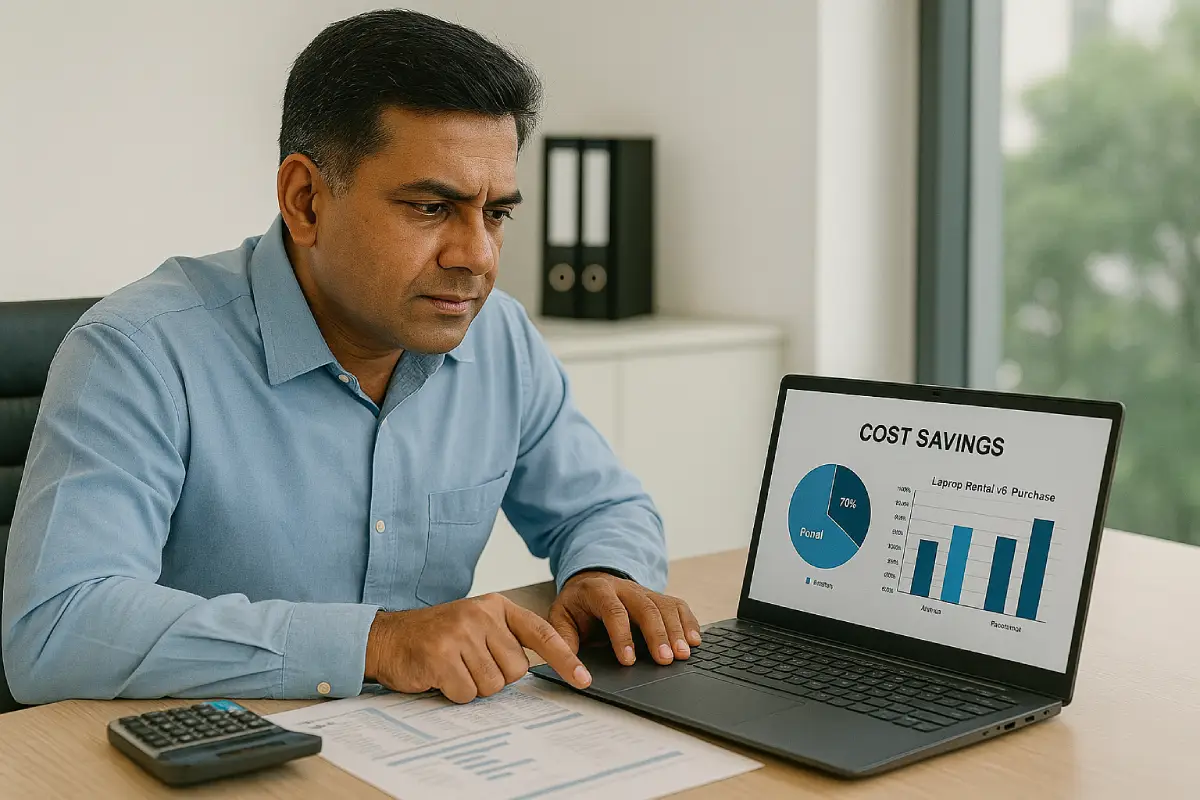
Start with a like-for-like comparison of the rental quotation and the full ownership cost over the same period.
Reduced upfront costs
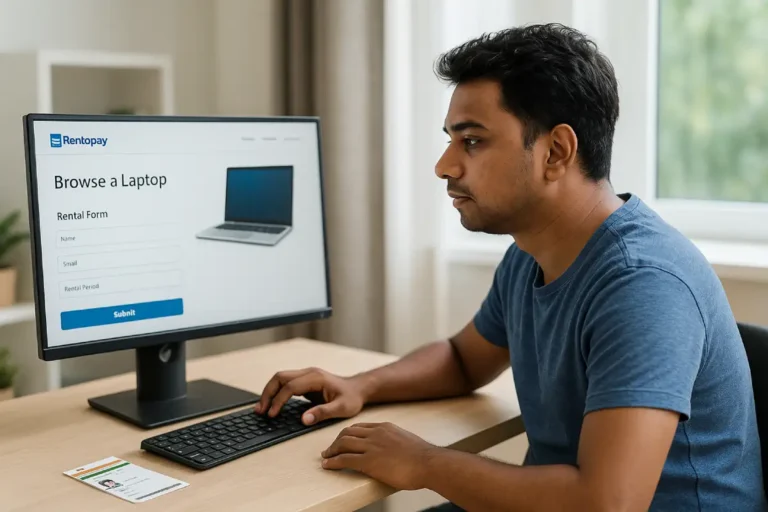
Renting can reduce the initial cash needed for devices because charges are spread across the agreed term. Whether that helps the business depends on the quoted rate, deposit, taxes, minimum duration and how long the devices are required.
That means you can:
- Preserve cash for product development, marketing, or hiring.
- Start new teams without waiting for next year’s budget cycle.
- Test new locations or projects without long‑term hardware commitments.
Accounting Treatment Depends on the Agreement
Do not assume that a contract will receive a particular accounting classification. The substance and terms of the agreement matter, so finance teams should review the quotation and contract under the accounting policies and rules that apply to the organisation.
Predictable rental payments help finance teams:
- Forecast expenses more accurately.
- Align hardware cost with project revenue.
- Avoid depreciation headaches on the balance sheet.
Include Support, Return and End-of-Term Costs
Compare maintenance, repair, accessories, support, transport, upgrades, damage, early-return and disposal responsibilities on both sides. Rental support is included only when the quotation or agreement says so.
At the end of a rental, return, extension, replacement or purchase options depend on the contract. Confirm the process, inspection standard, data-removal responsibility and charges before signing.
Confirm Tax Treatment with a Qualified Adviser
Tax treatment varies by jurisdiction, customer and contract. Rentopay does not provide tax advice; ask a qualified adviser to review the agreement before relying on any deduction, credit or classification.
Operational Flexibility and Scalability
Money matters, but so does the ability to move fast. One of the biggest laptop rentals for businesses is operational flexibility.

Easy scaling for growing teams
When a project or team changes, rental may offer a way to request more or fewer devices. Any change remains subject to stock, notice periods, minimum quantities, revised pricing and the contract.
- Ask whether quantity can increase and how much notice is required.
- Confirm whether quantity can decrease and what early-return charges apply.
- Set a realistic onboarding date that includes configuration, testing and delivery.
This can help HR and project teams plan, but it does not remove procurement lead time or guarantee stock.
Ideal for temporary needs and special projects
Temporary programmes, events, seasonal work and pilot projects are common cases to compare because the device requirement has a defined period. Verify the minimum term and total charges for that period.
- Training programs and bootcamps.
- Hackathons, demos, and corporate events that need short-term laptop rentals.
- Seasonal staff during busy periods.
- Short‑term client projects or pilots.
Rent the quantity and duration supported by the written requirement; extensions, reductions and returns remain subject to the agreement.
Fast deployment and standardisation
Ask the provider to quote the required preparation rather than assume every device will arrive customised.
- Confirm the operating system version and who applies the organisation’s security policies.
- List required software and identify who supplies and manages each licence.
- Confirm whether asset tags or labels are available and who records them.
Standardised configurations may reduce variation, but the buyer’s IT team must still test access, applications, policies and user workflows before rollout.
Technology Access and Performance Edge
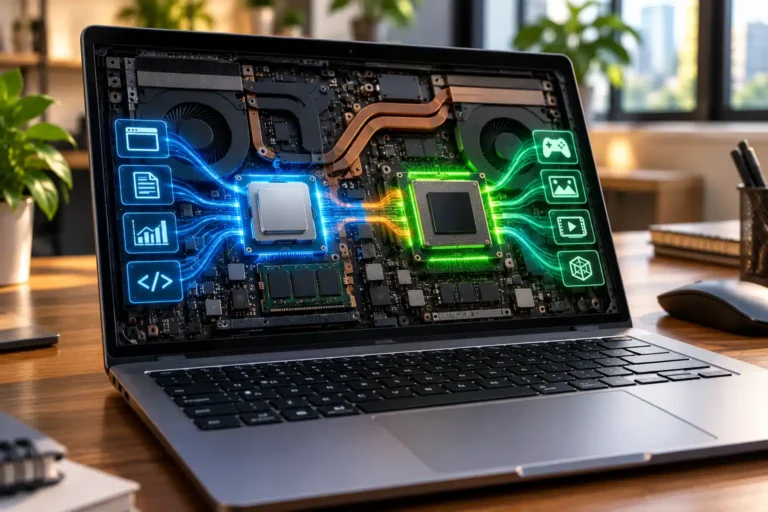
Keeping hardware up to date is a real challenge. New processors, more RAM, better graphics, and security features appear every year.

Access to Suitable Technology
Rental can provide access to an agreed configuration for the contract term. It does not guarantee the newest model, so specify the minimum processor generation, RAM, storage, display, ports and operating-system requirements.
Benefits include:
- Faster boot times and smoother multitasking.
- Better support for current operating systems and tools.
- Improved battery life and connectivity options.
This matters a lot for engineers, designers, data analysts, and anyone running heavy workloads.
High performance for demanding roles
Many laptop rental benefits for IT companies show up in technical teams:
- Developers can run IDEs, containers, and test environments without lag.
- Designers and editors can work with high‑resolution files and video timelines.
- QA teams can test across different hardware profiles when needed.
Instead of buying top‑spec laptops that may be overkill for some employees, you can rent specialised configurations only for the roles that truly need them.
Simplified Management and Hassle-Free Operations
Another major benefit of laptop rentals is the reduction in day‑to‑day IT headaches.
Outsourced maintenance and support
Ownership and rental allocate support responsibilities differently. The agreement should identify who troubleshoots, repairs, replaces, collects and returns each device, and what the internal IT team must still manage.
Before treating support as a benefit, confirm:
- Which hardware faults are covered and which damage is chargeable.
- Support hours, response targets, collection method and replacement timing.
- The tasks that remain with internal IT, including identity, access, software and data.
This is one of the most practical laptop rentals for businesses that want lean internal teams.
Streamlined logistics and delivery
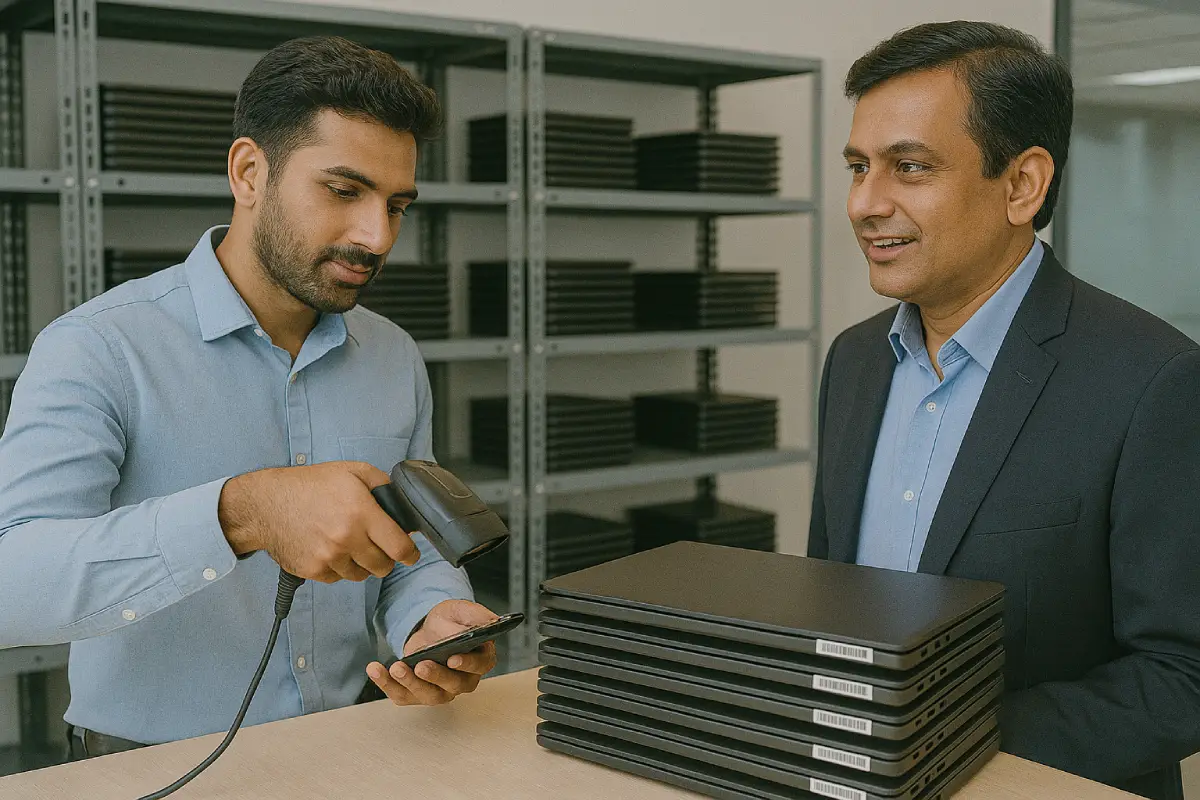
For multi-device deployments, request a logistics plan covering testing, imaging, serial-number records, delivery, acceptance, movement between users and return.
- Ask whether pre-delivery testing and imaging are included.
- Confirm whether on-site installation is available, scheduled and separately charged.
- Document the collection window, packing responsibility and return charges.
A written plan can reduce coordination work; it does not transfer responsibilities that are absent from the contract.
Easier asset management
Tracking hundreds of owned laptops—who has what, what needs repair, what must be replaced—is hard. Rental models simplify this.
- Confirm who maintains the inventory and assignment records.
- Agree how serial numbers, condition and device history will be recorded.
- Document return, resale, refurbishment and disposal responsibilities.
The result: less clutter in your store rooms and cleaner IT reports.
Strategic and Long-Term Laptop Rental Benefits
Beyond cost and convenience, laptop rentals also support larger strategic goals for corporate companies.
Ideal for agile businesses and startups
Startups and fast‑growing tech firms need to move quickly but cautiously. Investing too much in hardware early can increase risk if plans change.
Laptop rentals help you:
- Confirm which plan, quantities, locations and change terms are available.
- Include configuration, testing and delivery lead time in project plans.
- Check early-return and quantity-reduction terms before approving a flexible plan.
- Compare hardware spending with the period and certainty of the requirement.
Changes to contract length, specifications or quantities are possible only when the provider confirms stock, notice, pricing and revised terms.
Stronger security practices
Do not assume a rented device has been securely wiped. Ask who sanitises storage before delivery and after return, which method is used, and what evidence is retained. NIST SP 800-88 Rev. 2 provides current media-sanitisation guidance for organisations and system owners.
The organisation remains responsible for its own identity, access, endpoint, encryption, logging, backup and data-handling controls. Provider processes should be reviewed as one part of that security programme.
Environmental responsibility
Corporate sustainability goals are now a standard expectation. International organisations like the ITU emphasise that building a circular economy for electronics is key to reducing e‑waste. Renting fits well with this circular economy mindset:
- Ask whether devices are reused and how condition is assessed between customers.
- Ask for evidence of refurbishment, recycling and end-of-life practices.
Choosing rentals over constant new purchases can help reduce e‑waste and align your IT strategy with ESG commitments.
Enhanced professional image
Having a fleet of modern, well‑maintained laptops also shapes how clients and employees see your organisation. It signals that you care about:
- Providing good tools for your teams.
- Staying current with technology.
- Running a professional, organised operation.
For customer‑facing teams, trainers, or consultants, this impression matters.
FAQs About Laptop Rentals for Businesses
Why do businesses lease laptops?
Businesses lease laptops to avoid high upfront costs, stay flexible, and access newer technology. Leasing or renting makes it easier to scale teams, manage cash flow, and reduce the burden of maintenance and asset disposal.
Is renting a laptop a good idea?
Yes, renting is a good idea when your needs change often, when you run short‑term projects, or when you want to test configurations before buying. Our guide on why renting a laptop is a smarter choice than buying explains this trade-off in more detail. It is especially useful for corporate companies that need predictable spending and quick deployment.
Why is a laptop important for a business?
Laptops are the primary work tool for most modern teams. They allow employees to communicate, build products, manage data, and serve customers from anywhere. Without reliable laptops, productivity drops and collaboration becomes difficult.
Do companies buy or lease laptops?
Many companies now use a mix of both, and our breakdown of laptop rental vs BYOD shows how shared or personal devices fit into that strategy. Core long‑term staff may get purchased devices, while contractors, project teams, and event staff work on leased or rented laptops. This hybrid approach combines stability with flexibility.
Final Thoughts: Should Your Company Switch to Laptop Rentals?
Potential benefits, when the quotation and responsibilities fit the requirement, can include:
- Lower upfront spending and better cash‑flow planning.
- Flexible scaling for new projects, teams, and locations.
- Access to current technology without constant upgrades.
- Less pressure on internal IT and operations teams.
- Strategic support for agility, security, and sustainability.
For IT‑driven organisations, these advantages can be the difference between slow, hardware‑limited growth and fast, confident expansion.
Need Help Choosing the Right Rental Strategy?
It’s normal to feel unsure. You may worry about picking the wrong configuration, overpaying for performance you don’t need, or facing downtime if something breaks.
Rentopay accepts quotation requests from startups, SMEs and enterprises. Available models, quantities, locations, terms, configuration and support are confirmed for the specific request.
Before approving a quotation, confirm:
- The accepted configuration for each role and any permitted equivalent model.
- The contract length, change process, support terms and total charges.
- The delivery, acceptance, asset-record, security and return responsibilities.
If you are comparing laptop rental benefits for corporate companies or planning a bulk laptop deployment, request a Rentopay quotation with the quantity, dates, locations, workloads and minimum specifications. Use the written response to compare availability, support, responsibilities and total cost.